
Mary Molloy 9/24/26
Join Our Email List
Get new content delivered directly to your inbox to help grow your faith in practical ways.
The Empty Tomb Project is a non-profit organization – 501(c)(3) – please support our mission by making a tax-deductible donation. DONATE HERE online or find out how to mail us your donation.

I have always been fascinated by the whole concept of social media influencers. I am amazed at how a short video can convince me that I suddenly need something I never knew I needed. Recently, I was influenced to buy soup bowls. I was convinced that these particular soup bowls that looked like little crockpots were the missing piece to my culinary life! Soup bowls are superficial examples of influence, but social media and entertainment can influence our hearts and values in much deeper ways than consumerism.
I recently watched the new Spider-Man movie and loved it. What struck me was the heroic virtue portrayed in many of the characters. The hero himself makes great sacrifices for others and endures judgment, criticism, and skepticism because of the responsibility that comes with his gifts. Spider-Man is one of my favorite superheroes because of his humility. Peter Parker is simply a kid from Queens who happens to be bitten by a spider and given extraordinary powers. He learns that “with great power comes great responsibility,” and he takes that responsibility seriously. He sacrifices his own comfort so that others can live in freedom.
I love this because Spider-Man reminds me of Christ, who becomes both hero and victim. Those who love Spider-Man and join him in his mission can also suffer because of their association with him. This, in many ways, is what it means to be holy: to receive what God has given us and offer it back in love and total self sacrifice.
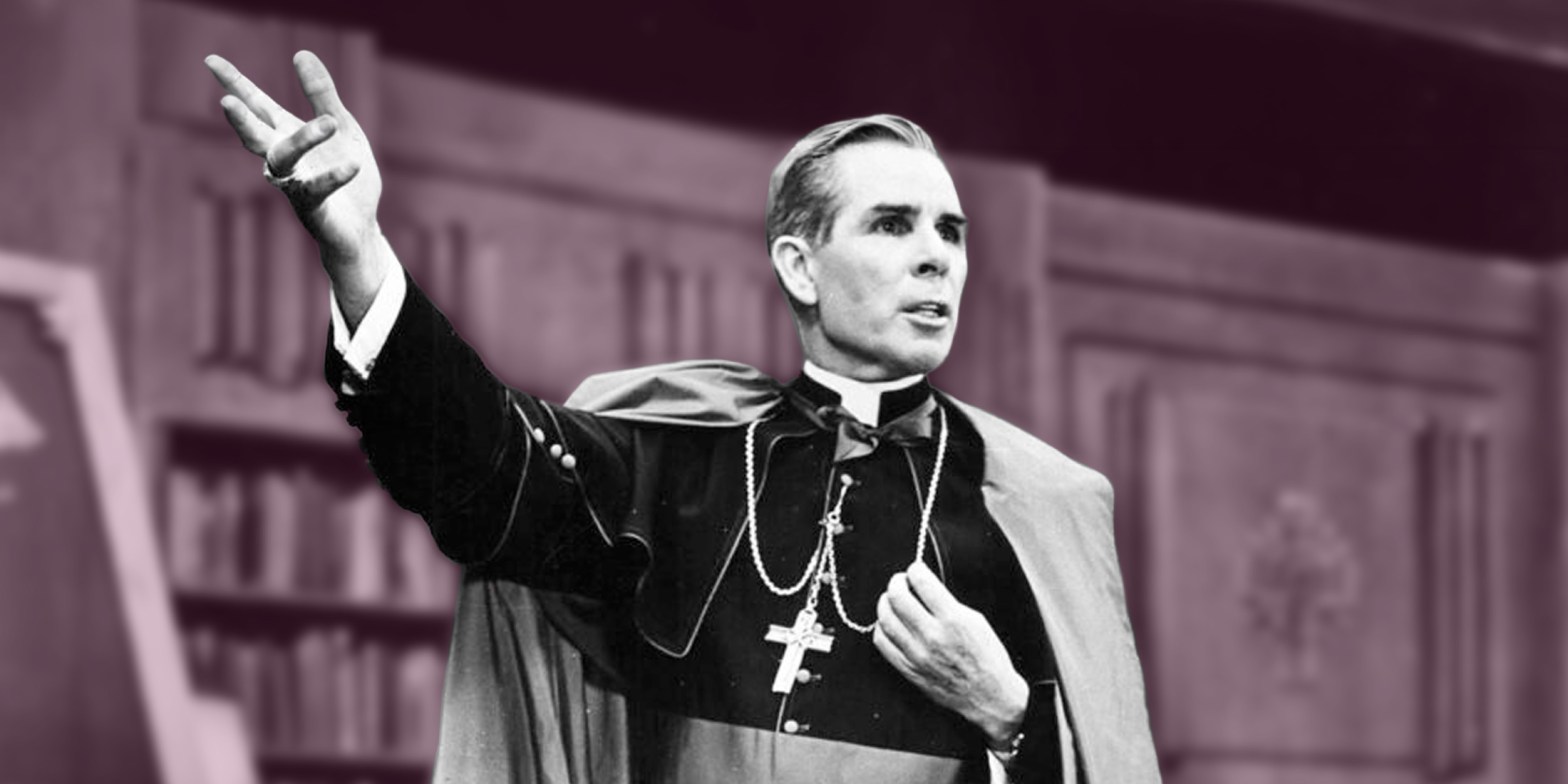
Watching Spider-Man had me pondering real life examples that we have for holiness in our own age of technology and social media. God has given us a number of modern witnesses who show us how to live faithfully in this world. Fulton Sheen immediately comes to mind. He was, in many ways, America’s first Catholic media influencer. Fulton Sheen, like Spider-Man, came from humble roots. His parents were farmers and hard workers who instilled in their children a love of wisdom, learning, faith, and perseverance. Sheen never lost that work ethic. His work as a teacher, bishop, radio host, and television personality was never ultimately about fame or success. His life revolved around Jesus Christ.
What makes Sheen especially compelling is that his path to influence and fame was not free from suffering. He experienced hurt and opposition both outside and inside the Church. He faced criticism from people who misunderstood him, opposition to his fearless preaching of truth, and painful tensions within the Church he loved and served. Yet Sheen did not allow these wounds to become the center of his life.
This is an important lesson today, when everyone can become a public voice through various means of modern technology. Influence can magnify both gifts, truth, tension and wounds. Sheen knew that being seen and admired by millions did not make him untouchable. Rejection came from those who opposed the Gospel and even from people within the Church. His answer was not bitterness, self-promotion, or fear, but deeper union with Christ through the sacraments. This courage and radical intimacy with Jesus makes his witness especially relevant today.
For Sheen, evangelization was never about protecting his reputation or promoting himself and his many gifts. He did not care whether he was popular, successful, or understood. He cared about remaining close to Christ and opening the door for as many people as possible to know the love of God.
His autobiography, Treasure in the Clay, offers a beautiful image for understanding this. Sheen recognized that Christ is the treasure, while we are merely clay. The clay must remain malleable so that it can hold the treasure and allow its light to shine. Sheen made a daily Holy Hour before the Blessed Sacrament a priority in order that his weak clay self would always hold the real Treasure who is Christ. He understood that personal relationship with Christ was necessary for perseverance in every vocation and task.
What strikes me most is that, after accomplishing so much, Sheen still felt that he had not become enough like Christ. Fame, education, influence, and success could not satisfy him because they were never the treasure. His wounds, accomplishments, and even failures all had to be brought to Christ.
This challenges me because I often focus on doing things for the Lord rather than simply seeking to be in relationship with Him. Sheen reminds us that at the end of our lives, God will not measure us by our education, influence, popularity, or accomplishments. He will ask whether we became united to Jesus and allowed His Light to shine through us.
Fulton Sheen shows us that holiness is possible even in the noise of modern life. Whether we are admired or criticized, successful or misunderstood, wounded from outside the Church or hurt by those within it, Christ remains our cornerstone. May we imitate Sheen by placing our lives, gifts, wounds, and work before Jesus in the Eucharist, allowing Him to transform our clay into a vessel through which His light can reach the world.
Mary Molloy teaches Religion at a Catholic high school on Long Island. She received her BA & MA in Catechetics and Theology from Franciscan University of Steubenville. She has spent the last 15 years in ministry both internationally and domestically. Her favorite thing is to serve the poor and spend quality time with her loved ones.
Join Our Email List
Get new content delivered directly to your inbox.

