
Thomas Griffin 7/3/25
Join Our Email List
Get new content delivered directly to your inbox.
The Empty Tomb Project is a non-profit organization – 501(c)(3) – please support our mission by making a tax-deductible donation. DONATE HERE

Read “Empty Tomb Project: The Magazine”
Let Us Begin: New Book on the Life and Power of St. Francis
We are all doubters. We all need him to make contact with us so that our doubt can be healed.
Today is the feast day of St. Thomas the Apostle. He is universally known as “Doubting Thomas.” The truth is that this version of Thomas is inside of all of us. He usually arises when our circumstances become challenging or things are not going the way we wished they would go.
Thomas was one of the select few who were called by name to serve with and spread the Kingdom of God that Jesus was initiating. There was something about him that Jesus saw as uniquely open to faith. Otherwise he would have never called him.
In hindsight, Jesus knew that Thomas would doubt his resurrection, but he called him anyway. Christ is not afraid of our occasional tendency to not believe in the promises of God or in his presence with us always either. He desires to heal us of our doubt in a very particular way. He desires to restore our trust in him as a real person just like he did with Thomas.
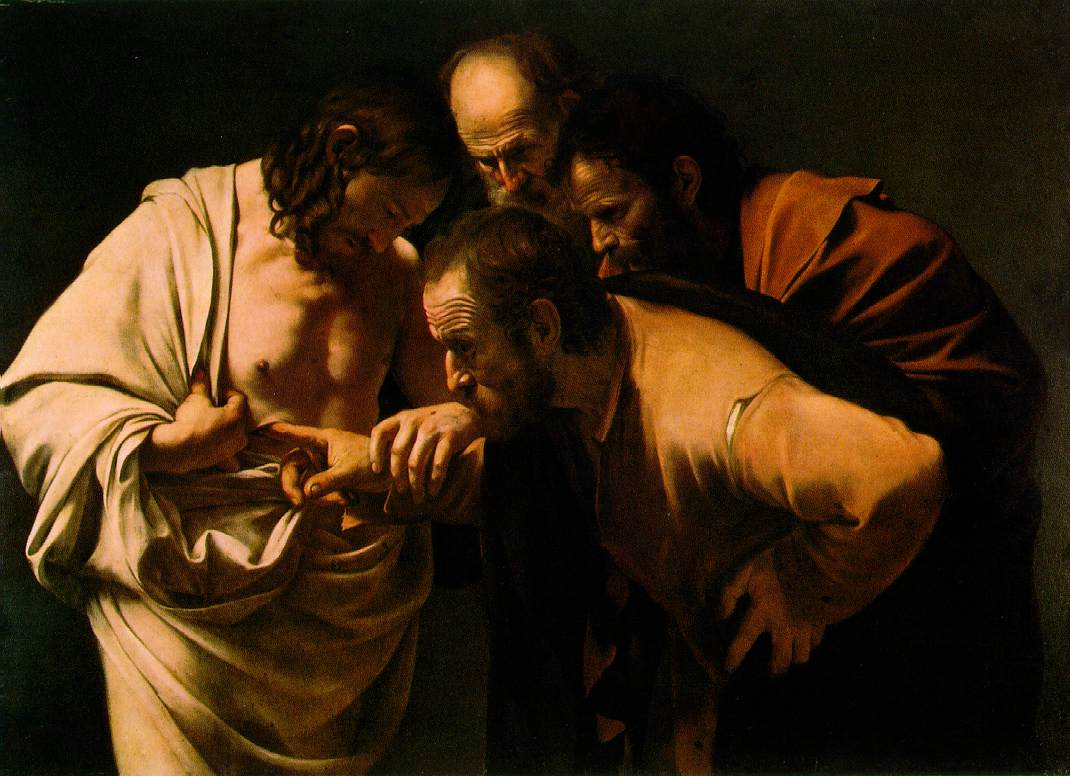
Thomas was not there when Jesus originally appeared to the Apostles. We don’t know why he wasn’t there. Despite hearing the eyewitness testimony of the group of Apostles, he refused to believe. He didn’t simply doubt. He put a disclaimer on what it would take for him to believe. He said that he would have to make physical contact with the wounds of Jesus.
Then we are told, “Jesus came, although the doors were locked, and stood in their midst” (John 20:26).
The paradox of the resurrection continues in this account. Jesus shouldn’t have been able to simply appear in that room. Jesus shouldn’t have been able to conquer death. But he did and he does. To this day, Jesus continues to break down our conception of what is possible when we rely on him.
An important note is the fact that the doors are locked because the disciples locked them. Despite Jesus’ appearance to them the week before, they are still afraid. They have seen Christ defeat death but it still does not dispel their worry about the future. What is your version of the locked doors? Has there been a time in your life when you were very afraid of your present situation but you later came to see that God was with you and your struggle?
Too often we allow fear to lock out God. When we do so we need to remember the times when we’ve done that, but he has broken through anyway. Maybe there was a sin that you were ashamed of, but you experienced God’s love or someone else’s love, despite that flaw. Maybe there was an illness that you had and that you didn’t think you could come out of but God saw you through it.
These are moments like the one in that upper room when Jesus breaks through. He was faithful back then and he will continue to remain faithful now.
Then Jesus said to Thomas, “Put your finger here and see my hands, and bring your hand and put it into my side, and do not be unbelieving, but believe” (John 20:27).
The exact request of Thomas for belief is answered by this appearance of Jesus. Thomas said he would only believe Jesus rose if he could touch the nail marks and put his hand in the side. Jesus wasn’t there when Thomas made this request to the apostles, but he knew what he needed anyway.
Jesus always hears us. He knows exactly what we need before we even ask (Matthew 6:8). We all need what Christ did for Thomas to happen to us. Our doubt will only be healed if we look for the ways in which he breaks through to make intimate and personal contact with us.
This happens in so many ways. Most poignantly it occurs in the Eucharist. Just like the scars on his hands and feet, the Eucharist is in the shape of a circle. Jesus keeps his scars because he knows they can transform our own wounds. Our wounds of sin. Wounds of doubt. Our wounds of fear. When we peer into the Eucharist we ought to see Jesus approaching us like he approached Thomas. At each Mass, Christ is on a mission to heal our doubt.
So on this day of the apostle, who doubted, consider what causes you to doubt the goodness of God. And, the next time you’re at mass or the next time you’re at prayer, reach out to touch his sacred scars. They will restore you to the site of faith in the living God who conquers everything just to have a chance to look you in the eyes and love you beyond your fear and doubt.
Thomas Griffin is the chairperson of the religion department at a Catholic high school on Long Island where he lives with his wife and three children. He has a masters degree in theology and is a masters candidate in philosophy. Thomas is the Founder and Editor-in-Chief of Empty Tomb Project: The Magazine. He is the author of Let Us Begin: Saint Francis’s Way of Becoming Like Christ and Renewing the World.
Join Our Email List
Get new content delivered directly to your inbox.
 Empty Tomb Project