
Thomas Griffin 5/1/25
Join Our Email List
Get new content delivered directly to your inbox.
The Empty Tomb Project is a non-profit organization – 501(c)(3) – please support our mission by making a tax-deductible donation. DONATE HERE

Read “Empty Tomb Project: The Magazine”
Let Us Begin: New Book on the Life and Power of St. Francis
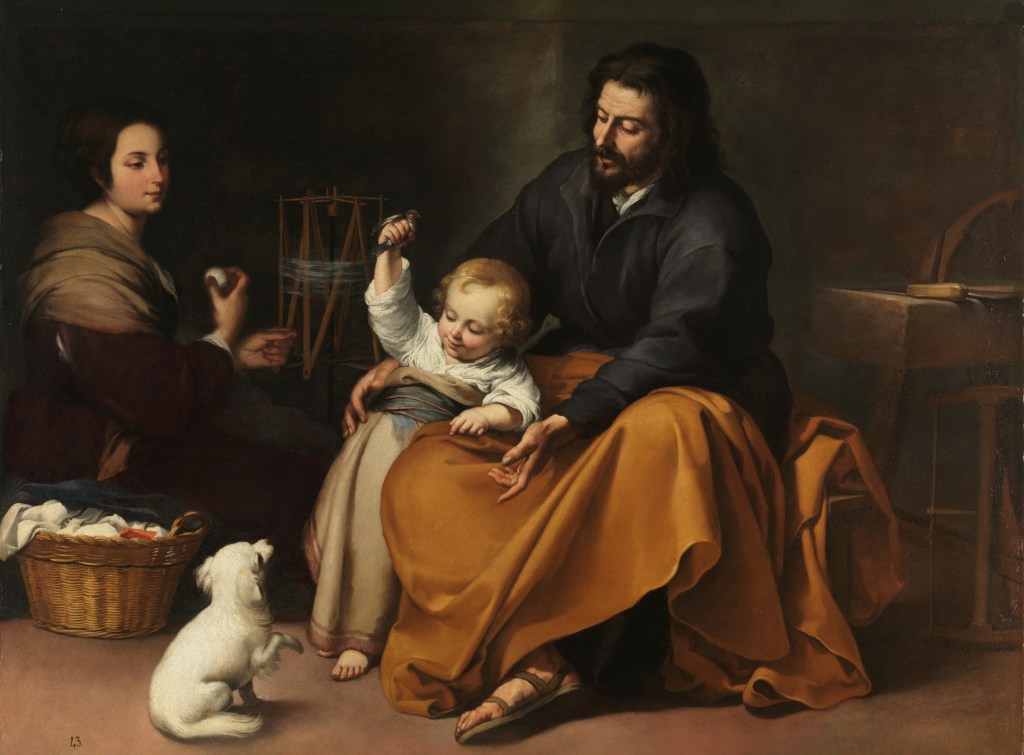
This specific celebration of St. Joseph was instituted by Pope Pius XII in 1955. His purpose with installing this feast was to draw more devotion to St. Joseph and to bring a greater focus to the dignity of work.
May 1st was, at the time, also known as May Day. Today we know it as International Workers’ Day. While it is now a day to celebrate workers, its roots are in the communist and socialist regime of the Soviet Union. It was instituted as an opportunity to parade the military power of the party as well as shed light on the importance of the working class in aiding the regime to fulfill its mission.
Pius XII desired to ensure that work was viewed from the Christian perspective and seen as valuable. Who better to teach us that then St. Joseph?
The pope wrote that it is through work that one can allow “the spirit of the Gospel to penetrate your life.” It is also certain, the pope continued, “that no worker was ever so perfectly and profoundly penetrated by it as the putative Father of Jesus, who lived with Him in the closest intimacy and community of family and work. Thus, if you want to be close to Christ, We also repeat to you today ‘Ite ad Ioseph’: Go to Joseph!”
Pius spoke to those who experience challenges at work. Whether that be the exploitation of their time, or the feelings that some had of being worthless in the large economic system of flawed countries and laws. He stressed the remedy. Workers must realize “that in daily life everything depends on relationships.”
So many workers, in 1955 and today, cannot control what the laws of their country, economy or job might enforce on them. Worrying about what one has to currently endure or what one will have to endure in the future must be oriented towards the truth of the faith and of the human person: we are made by and made for union with others. Through work this truth can become more clear, no matter the circumstances.
Pope Pius XII noted, for this reason, that “in the workers’ movement, only those who direct their gaze solely to the immediate political aspect, to the game of majorities, can suffer real disappointment.” Through the formation of the Church as well as other secular faith entities, workers are encouraged to bring their faith in Christ into their work as a way to sanctify their work and the world. We know this is true because God works in the ordinary details of our lives.
From the beginning, literally, God imbued human beings with a nature that would benefit from work. When God created the earth and placed man in it, “The LORD God then took the man and settled him in the garden of Eden, to cultivate and care for it” (Genesis 2:15). It is through the work of our lives that we will come into closer union with others, a deeper appreciation for our own value and a more profound awareness of our need to be grateful to God for the life (and world) we have been given.
The fact of the matter is that the world has manipulated work into a reality that is solely concerned with producing money or enforcing one’s power over others. Neither of these can bring us full satisfaction. Both money and power are also false securities in this life. Neither can aid us when we are faced with the death of a loved one or the existential questions of life. Whether we have issues at work or in our families or simply in our own hearts – what we need is the knowledge that we are never alone.
“Be certain,” Pius said “that in every occasion you will have at your side a guide, a defender, a Father.” Joseph taught Jesus the value of work and he, presumably, aided his humanity in learning how to navigate the ups and downs of life. The more we rely on Joseph, the more we will be given a vision into what it means to be fully alive and the more that we will be given access to the heart of Christ.
In closing, the pope noted that “the humble craftsman of Nazareth not only embodies before God and the Holy Church the dignity of the worker of the arm, but is also always the provident guardian of you and your families.”
Today, no matter what our work looks like, may we go to Joseph with the knowledge that he will bring us closer to his Son. May we remember that, in all circumstances of life, we have a powerful witness and intercessor right at our side – inside and outside of work hours.
Thomas Griffin is the chairperson of the religion department at a Catholic high school on Long Island where he lives with his wife and two sons. He has a masters degree in theology and is the Founder and Editor-in-Chief of Empty Tomb Project: The Magazine. He is the author of Let Us Begin: Saint Francis’s Way of Becoming Like Christ and Renewing the World.
Join Our Email List
Get new content delivered directly to your inbox.
 Empty Tomb Project