
Thomas Griffin 10/17/24
Join Our Email List
Get new content delivered directly to your inbox.
The Empty Tomb Project is a non-profit organization – 501(c)(3) – please support our mission by making a tax-deductible donation. DONATE HERE

Read “Empty Tomb Project: The Magazine”
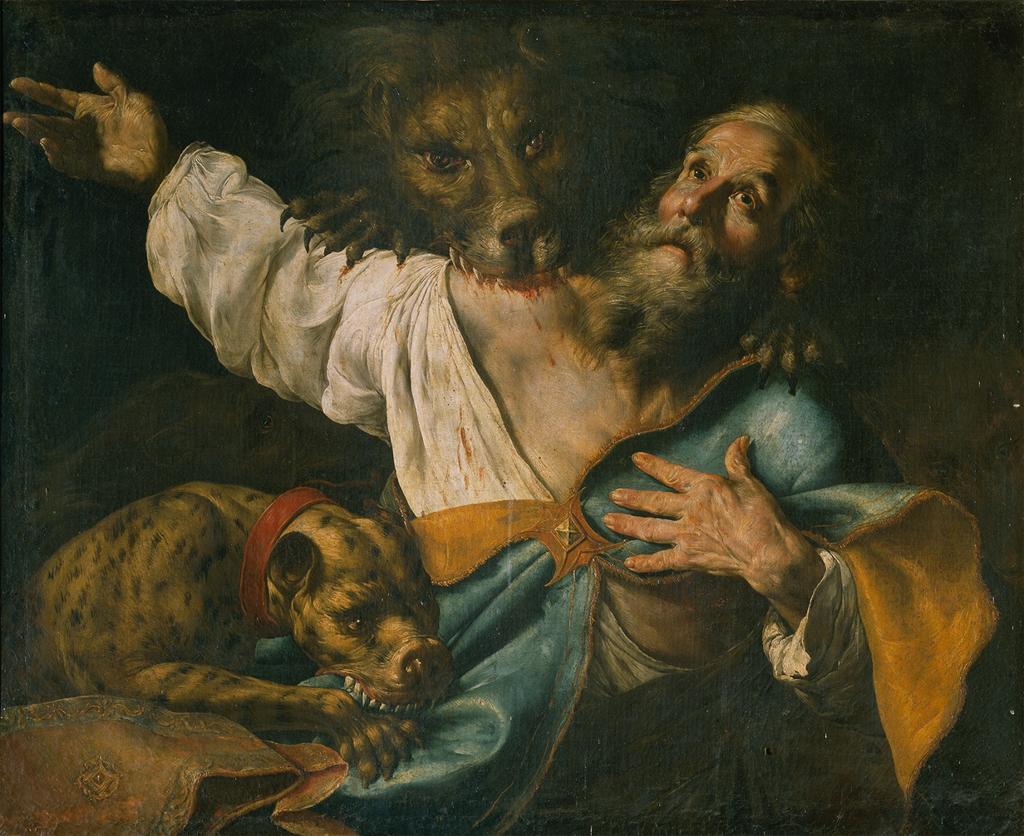
St. Ignatius of Antioch (also known as St. Ignatius Martyr) was sentenced to death by Emperor Trajan in 107 A.D. – he was fed to the lions in a Roman form of entertainment.
Ignatius was a priest and a bishop who loved his people dearly. He desired to serve them well and he did this through his utter fascination in becoming intimately united with the living and risen Jesus Christ. His mind was always caught up in how to draw closer to Christ and how to meet him more powerfully.
During the reign of Trajan, Christians experienced much persecution. On the emperor’s visit to Antioch, Christians were given the choice between denying their faith and publicly renouncing Jesus or facing death. When Ignatius was put on the spot he refused to deny Christ and he was placed in chains to be brought to Rome for execution. The Romans were hopeful that the murder of the religious leader in the area would calm the spread of Christianity.
On the way to Rome, Ignatius wrote letters to the communities that he knew well. These letters serve as a living memory of the courageous faith that he lived with and that he desired for others to have. They also show that it was the preaching and witness of Ignatius that inspired the ancient church before and after his death.
Ignatius once said, “Christianity is not a matter of persuading people of particular ideas, but of inviting them to share in the greatness of Christ. So pray that I may never fall into the trap of impressing people with clever speech, but instead I may learn to speak with humility, desiring only to impress people with Christ himself.”
Our faith is not an idea. It is not a project that revolves around a view of the world or a philosophy. Our faith is concerned with a person: Jesus Christ. It is an encounter with him as a real living person that will captivate people’s hearts. That is how Jesus gained followers two thousand years ago and that is how he continues to change people’s lives today. To be Christian is to meet Jesus and be convinced that he is the way to true fulfillment and life.
Ignatius also wrote the following, “We recognize a tree by its fruit, and we ought to be able to recognize a Christian by his action. The fruit of faith should be evident in our lives, for being a Christian is more than making sound professions of faith. It should reveal itself in practical and visible ways.”
The saint we honor today was practically impacted by his relationship with God – he was killed for it. How does your faith practically impact your life?
Thankfully, we are not facing persecution. We don’t live under the fear of having to choose between life and professing our faith. However, the Christian faith must impact our literal lives if we are to truly be a follower of Jesus. While the very public nature of Ignatius’ role as bishop and death in Rome made it easier for others to see his faith we are also invited to pronounce our faith in word and in deed.
This can take place in so many ways. Attending Mass each Sunday and being willing to speak to someone about it at work the following week. Praying before meals while eating at a restaurant with your family. Learning more about the reasons and logic of the faith and sharing that with family members and friends. All of these can be channels that make us more like Ignatius.
Finally, the quote of Ignatius that reveals the deepest strength of his faith comes in response to some reports that he hears that people from Antioch are going to try and break him out of his imprisonment before his execution. In his Letter to the Romans he says the following:
“Allow me to become food for the wild beasts, through whose instrumentality it will be granted me to attain to God. I am the wheat of God, and let me be ground by the teeth of the wild beasts, that I may be found to be the pure bread of Christ. Rather entice the wild beasts, that they may become my tomb, and may leave nothing of my body; so that when I have fallen asleep in death, I may be no trouble to anyone. Then shall I truly be a disciple of Christ, when the world shall not see so much as my body. Entreat Christ for me, that by these instruments I may be found a sacrifice to God.”
The Christian life is all about a relationship with Jesus. Being united with him happens most powerfully when we receive the Eucharist. When we receive the Bread of Life we can become like the One we receive. Ignatius knew that he was being called to become like Christ by also dying. – in his case he was also going to be fed on. The Eucharist he received for so long was now becoming a reality in himself. Ignatius was becoming a living offering.
If we do, our sacrifice will breed faith in others, like Ignatius’ faith did. Emperor Trajan thought the murder of this man would calm the spread of the faith, but the opposite happened. Because when we become an offering, others are able to meet God through us.
So, as you travel through the practicals of you life, consider how you can become more of a sacrifice to God through your worship, witness and words. Then we will live out the motto of Ignatius Martyr: “I desire that I may not merely be called a Christian, but really be found to be one.”
Thomas Griffin is the chairperson of the religion department at a Catholic high school on Long Island where he lives with his wife and two sons. He has a masters degree in theology and is the Founder and Editor-in-Chief of Empty Tomb Project: The Magazine. He is the author of Let Us Begin: Saint Francis’s Way of Becoming Like Christ and Renewing the World.
Join Our Email List
Get new content delivered directly to your inbox.
 Empty Tomb Project