
Thomas Griffin 10/15/24
Join Our Email List
Get new content delivered directly to your inbox.
The Empty Tomb Project is a non-profit organization – 501(c)(3) – please support our mission by making a tax-deductible donation. DONATE HERE

Read “Empty Tomb Project: The Magazine”
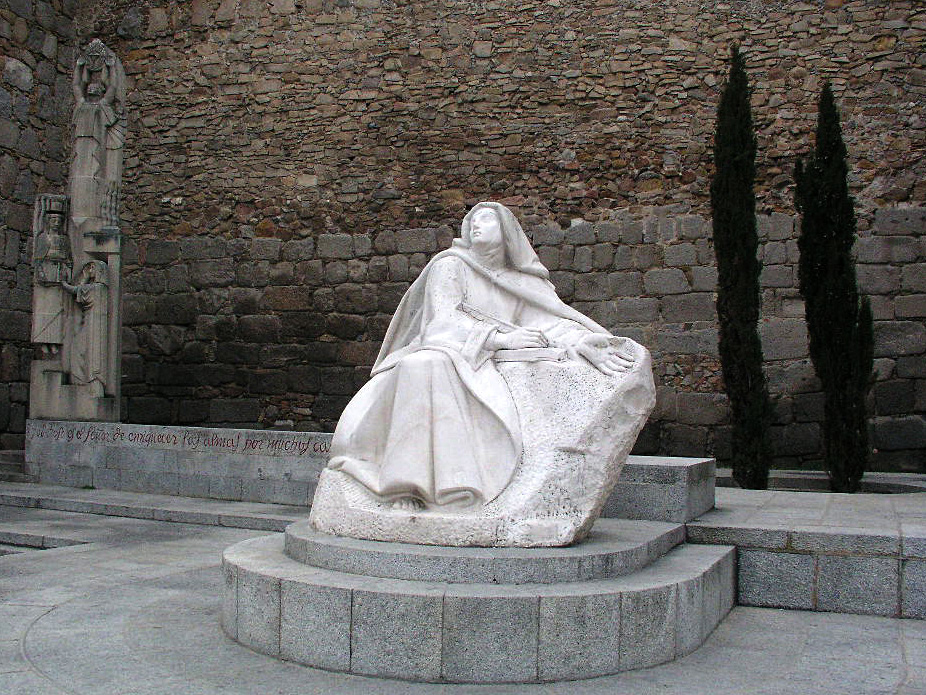
St. Teresa of Avila (1515-1582) is a Doctor of the Church and one of the most powerful spiritual writers in the history of the Catholic Church. Her writings have been studied by countless religious and lay people over the centuries. Her prayer life has sparked so many souls to come into real contact with the living and risen Jesus Christ.
So much could be said about the witness and words of this saint. However, it is her boldness in the spiritual life that truly sets her apart. This boldness does not come from a pride or a sense that she deserves more than others. Neither does it come from a place of demanding of God what He is not able to give. The following words best summarize her spiritual boldness:
“Many remain at the bottom of the mount [the mountain of prayer] who could ascend to the top…I repeat and ask that you may always have courageous thoughts. As a result of these, the Lord will grant you the grace for courageous deeds.”
When we set out to pray, we set the bar too low. Prayer can be challenging and we need to depend on God’s grace to guide us and inspire us. We also need to ask God to bring us to the heights. The heights of prayer is spiritual union with the living God. Prayer is not part of our relationship with God, it is our relationship with God. Prayer is spending time with God and speaking to Him while we are in His presence.
Too often we can become trapped in praying the same words each day out of mere obligation and nothing else. We can get into a routine of prayer that suffocates what the love of God is attempting to do in and through us. If we are courageous in our spiritual life we will seek union with God through a precise attentiveness to the fact that He is truly at our side each and every time that we go to pray. He is the one calling us to pray before we even arrive.
Second, Teresa knows that this union with God in prayer will lead to courageous deeds. Prayer grows loving action. The spiritual giant notes again:
“The surest way to determine whether one possesses the love of God is to see whether he or she loves his or her neighbor. These two loves are never separated. Rest assured, the more you progress in love of neighbor, the more your love of God will increase.”
The litmus test for true holiness is found in how we look at and treat others. Holiness is not merely being strong enough to perform good actions. It is not a trophy for correct behavior. Holiness is grown in the chapel. Sanctification is fed through a daily commitment to encounter the living God. Then we see the other person as God sees them. We treat them with dignity because they are God’s child, who He died for.
Finally, Teresa of Avila is so helpful in keeping us grounded in our own self-identity. She notes that “we shall never learn to know ourselves except by endeavoring to know God; for, beholding his greatness, we realize our own littleness; his purity shows us our foulness; and by meditating upon his humility we find how very far we are from being humble.”
The Christian life can be summed up with these words. Knowledge of God makes us more knowledgeable of ourselves and more comfortable with that knowledge because we are His. The closer we come to experiencing God in prayer the more we understand that we are in need of His goodness and mercy because we are too often broken and flawed. This knowledge will automatically make us more humble in approaching the God of the universe when we pray.
The Infinite One is never done with you and me. There is always more that we can do to grow closer to Him because our relationship with the God of Love is an endless pursuit. Like a marriage that is always growing in intimacy and sacrifice, our friendship with God is a depth that calls us to always keep going.
If we do so, we will be brought to the heights and to the heart of the One that carves us into His own image.
Thomas Griffin is the chairperson of the religion department at a Catholic high school on Long Island where he lives with his wife and two sons. He has a masters degree in theology and is the Founder and Editor-in-Chief of Empty Tomb Project: The Magazine. He is the author of Let Us Begin: Saint Francis’s Way of Becoming Like Christ and Renewing the World.
Join Our Email List
Get new content delivered directly to your inbox.
 Empty Tomb Project