
Thomas Griffin 8/20/24
Join Our Email List
Get new content delivered directly to your inbox.
The Empty Tomb Project is a non-profit organization – 501(c)(3) – please support our mission by making a tax-deductible donation. DONATE HERE

Read “Empty Tomb Project: The Magazine”
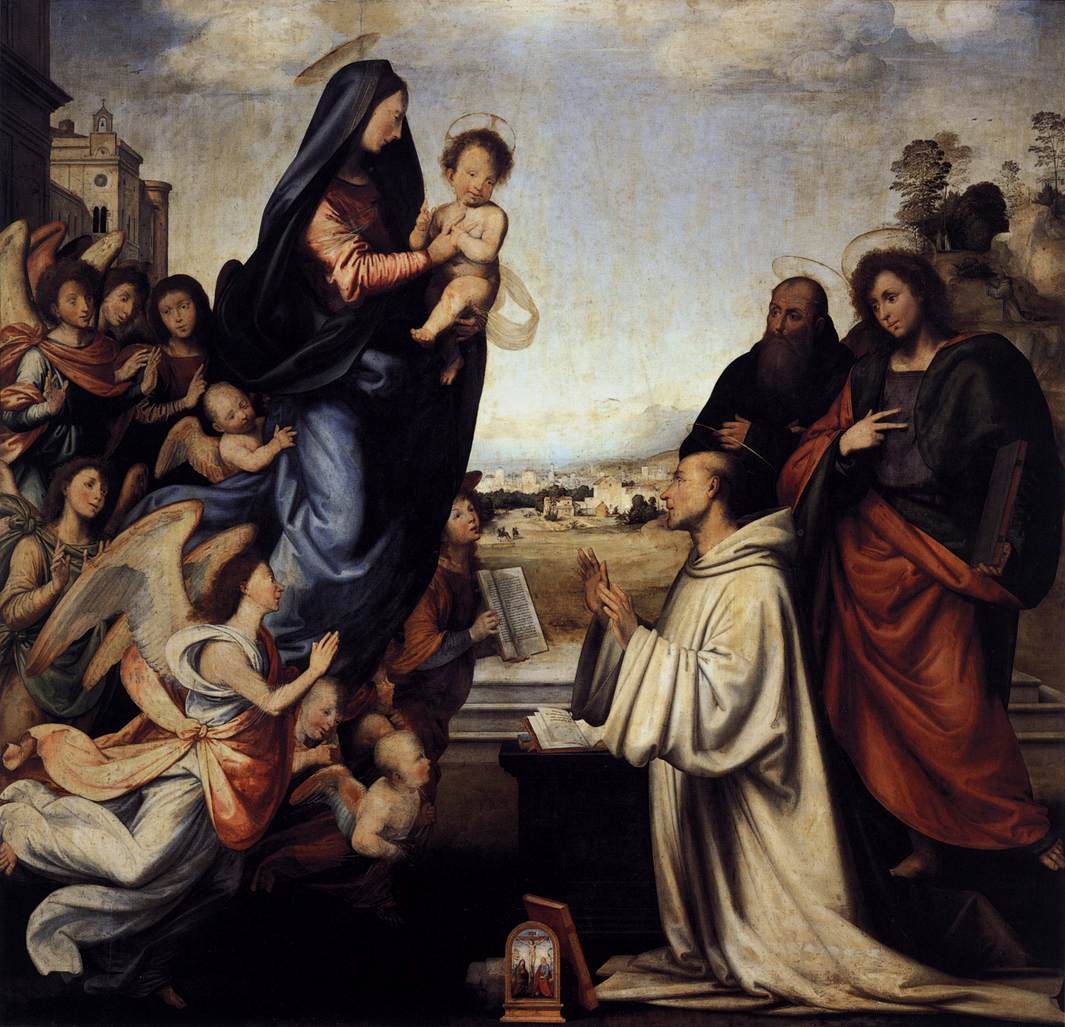
St. Bernard of Clairvaux (1090-1153) was a Cistercian monk from France who was known to be a “jack of all trades.” He was a man of deep prayer. He was a great preacher. He was able to distill disputes and he was a natural-born leader. All of these gifts were animated by his love for and relationship with Jesus Christ.
When Bernard was about 20 years old, tragedy hit his heart – his mother died. He was already contemplating joining a religious community but decided to join the Cistercians not long after his mother’s death. Some speculate that this event forever clarified the importance of serving God above all things in his life.
Within a few years, Bernard brought along roughly 30 of his friends, several of his brothers and two of his uncles to join the community with him. After reviving the monastery of Citeaux, he was later asked to be the abbot and founder of another house in France that he named “Clare’s Valley” or Clairvaux after St. Clare of Assisi.
He spent years here, devoted to the formation of his brothers and his own personal holiness. He became known for his deep knowledge and wisdom. In reference to being a person of intellectual mastery, Bernard said, “There are those who seek knowledge for the sake of knowledge; that is Curiosity. There are those who seek knowledge to be known by others; that is Vanity. There are those who seek knowledge in order to serve; that is Love.”
In these lines we can view the purpose of his study: to serve others and to love others. Knowledge of the world and of spiritual things allows one to encounter the truth and share it with others. Bernard was sought out for his advice and counsel just for this reason. Others could see that there was a depth to his heart and mind because of what he lived and experienced. Knowledge became a well that would draw nourishment from.
He was wrapped up in the affairs of Jesus Christ. These did not make him stand-offish or unconcerned with others but rooted him more in this world in order to revive it. His life was truly a love affair with the God of the universe who was made flesh in Jesus Christ. For this reason, Bernard wrote:
“Jesus the very thought of Thee – With sweetness fills my breast; But sweeter far Thy face to see, And in Thy presence rest.”
He deeply longed to be united with God. So he spent hours in deep prayer and study each day. The more he did so, the more he was able to gain a glimpse into the goal of human existence: to rest with God forever. He experienced that presence in prayer and study but most profoundly in the Eucharist – the true Presence of Christ on earth. Resting before the tabernacle and following Holy Communion enabled him to be fed to serve others. His ability to reach others stemmed from his connection to the living God.
Bernard noted that all should “Learn the lesson that, if you are to do the work of a prophet, what you need is not a scepter but a hoe.” A scepter is a staff carried by a powerful world ruler. It signifies worldly strength and influence. It also signified a ruler who is not deeply connected with those he rules. A hoe on the other hand, takes hands-on work. You have to direct it in order for the animal to till the ground correctly. You have to pay close attention and never take your eyes off your work.
In order to bring others closer to God, we must do the same. We must keep our eyes on God and we must keep our eyes pierced on how we can bring others to meet Him. We must not rule the faith over others like we are better than them, but be willing to share the tough circumstances of our life with others so we can build a relationship with them. It is in relationship with others that we can show them our relationship with Christ, whose “yoke is easy” and whose “burden is light” (Matthew 11: 30).
Finally, we can gain insight into the heart of Bernard by viewing his words regarding what we owe God. “Admit,” he writes, “that God deserves to be loved very much, yea, boundlessly, because He loved us first, He infinite and we nothing, loved us, miserable sinners, with a love so great and so free. This is why…the measure of our love to God is to love immeasurably. For since our love is toward God, who is infinite and immeasurable, how can we bound or limit the love we owe Him?”
Here is the truth that all of the saints teach us, in their own special way. Faith is the response to God’s invitation. Faith is the ability to first see that God loves you “boundlessly and immeasurably.” Once we experience this and know this truth we live our lives in pursuit of returning that love as best as we can. Today, may we learn from St. Bernard, who loved without counting the cost and who invites us to love God in the same way.
Thomas Griffin is the chairperson of the religion department at a Catholic high school on Long Island where he lives with his wife and two sons. He has a masters degree in theology and is the Founder and Editor-in-Chief of Empty Tomb Project: The Magazine. He is the author of Let Us Begin: Saint Francis’s Way of Becoming Like Christ and Renewing the World.
Join Our Email List
Get new content delivered directly to your inbox.
 Empty Tomb Project